
Abstract
Ads with adult themes are produced devoid of the consideration that there might children amongst the viewers watching these themes and are being cognized sexually. The current study aims to analyze the issue of sexualization in children of Pakistan through exposure to sexual themes used in TV advertisements. The current research employed dual research methods. In the first stage, qualitative content analysis of television ads was conducted, and in the second stage; focused group interviews were conducted with the children to validate the findings of the first method. The results indicate that children learn and imitate what they watch through TV advertisements. It concludes that exposure of children to such advertisements containing sexual content and themes leads to the adaptation of behavior that is not suitable for the children.
Key Words
TV Advertisements, Sexualization, Pakistani Children, Heavy Viewers, Light Viewers
Introduction
The first two or three years of our lives tend to get forgotten in time, whereas there are the early experiences, that maya just remain for years to come and last to influence even till adulthood. The human brain goes through a phase of rapid development from birth, and it is the early experiences that define if the foundation of your mind is strong or fragile. During the early years of growth and development, the mind is fragile and prone to influence from external circumstances and experiences for either the better or worse (Center on the Developing Child, 2007).
Various research studies have been conducted on how media affects different demographic segments of the society still there is ample need to study its effect upon children. Ads with adult themes are produced devoid of the consideration that there might children amongst the viewers watching these themes and are being cognized sexually. The exposure of children to such advertisements containing sexual content and themes leads to the adaptation of behavior that is not suitable for the children. Then what of the consequences; the concern stands vital as there is an evident lack of literature and research on the subject in the context of Pakistan.
The current study aims to analyze the issue of sexualization in children of Pakistan through exposure to sexual themes used in TV advertisements, in hopes that this may become an anchor for future studies on the subject. The three main objectives of the study are as follows: 1) exploration of how sexual messages are presented and framed in advertisements, 2) to study the impact such advertisements have on light and heavy viewer children; 3) and lastly to analyze how these sexual indicators being exposed to the children, are sexualizing them.
Impact of Sexual Themed Advertisements on Children
Psychology defines the reproduction or enactment of an action done by another being as ‘Imitation’. There are studies on infants that showcase how a child will reproduce movements seen and acted on by others in the second half of their first year. Be it raising of their arms to trying to speak, the imitation phase in our lives start in the first two years of age. As the child grows up, they are exposed to models of all kinds.
As Linda (2007) observes in her study that when sexual conducts and society standards determine a person’s belief regarding their physcial appeal, as being sexy, they are then taken as objects to be used by others and in return lose any holding of their own independent unique value. In such situations sexuality is forced upon them, making them the victims of sexualization.
Where looking young is the definition of being a ‘sexy’ women, the line dividing who is mature and who is not, is confused (Cook & Kaiser, 2004). Objectification hence is now the comprehensive worry of the blurring boundaries between childhood and adulthood (Buckingham, 2000).
Lin (1997) presents in his study that women in peak TVCs are often portrayed with lack of appropriate clothing, they expose a rather seductive side and are taken as an object of appeal. The research further demonstrates the ratio of objectification, as stating 9.2% are men and 20.8% are women. On MTV (Signorielli, McLeod, & Healy, 1994) similar analyses and results were presented supporting Lin’s study.
Cultivation Effect of Media
Studying the effects of media, Gerbner & Gross (1976) debated that whether and if the exposure of television influences the everyday life perceptions of its viewers. The theory claims that the high television viewers tend to be vulnerable to media messages compared to those that are light viewers. Cultivation theory focuses more on attitudinal changes than behaviors of the viewers. The theory focuses on the unguarded impact TV has its audience, the line between reality and the virtual fabrication gets blurred, and even friction is considered real, making the viewers defenseless against the media intend.
The variance in the heavy and light viewer’s viewpoints indicate the role of TV on shaping a viewer’s perception of social reality (Shanahan, 1999). Cultivation theory needs to be highlighted and comprehended here to explain the methodology of this research’s approach. Gerbner’s study provides the building block for the concept that for heavy viewers the only reality of what they see on TV. Television exposure embeds values, attitudes and longings in people, hypothetically explained as someone living all alone with the TV being the only link to the outside world. For them the world they see on television is the only real world - a world which holds nothing of the real world (Fisher, 2008).
Methodology
The current research comprises of two parts. The first being a qualitative content analysis of television ads and the second continues with the findings being validated in focused group interviews from the children. The researchers opted for 12 ads to access if they held sexual themes. The cause-and-effect relationship between dependent and independent variables were examined and so were the effects of sexual appeals able to be imitated, which may also influence a child’s development, validated and investigated with focus group discussion.
Survey method was used to study the cultivation effect of television viewing and the reaction to its messages. The viewing time was of importance, as based on which questions were addressed regarding the effect a certain amount of TV exposure has on the interpretation of messages by respondents.
The researchers to avoid the social and cultural issues getting limited by quantitative design, concluded to use qualitative research, to address the questions of how and why an occurrence takes place. The order followed for the qualitative research is observation and open-ended discussion assemblies. Conclusions were drawn after the interpretations of the respondents were recorded, which led to a comprehensive understanding of people and their behavior. The study enabled the researchers to develop cultural and social contexts.
Pakistani television advertisements were selected as the research population for content analysis. While for the focus group discussions the children of Pakistan were taken for the non-random purposive sampling. The ads were accessed with qualitative research, the codes address the base would the advertisements be analyzed (Gibbs, 2007). Thematic analysis was used to generate a coding sheet, five themes were used to analyze the sexual appeals in the ads.
A total of 60 children were taken as the purposive sample for the focus group research. The children selected were based on characteristics proving helpful to the research objectives. The same was taken into consideration for selecting the ads for content analysis, to validate that if the themes found in the 12 ads had underlying sexual agents r not. Hereogenous sampling technique was used for the ad selection.
On the other hand, the samples for the focus group discussions were categorized into four groups; where each group had 15 children. 2 groups meaning 30 children, were selected for the TV heavy viewers category; and 2 other, each consisting of 15 students were selected for light TV viewers sample. The age limit taken for this research was 2 to 12 years, which is a defined age limit for childhood by Piaget’s stages of development.
Research on the heavy viewer’s focus groups were conducted after slecting a school which contained studnets accomodating to the current research’s objectives. To contribute to broader viewpoints, the children selected were diverse in ethnicity and social class (verified by the teachers and parents).
On the other hand two islamic religious schools known by madrassas, based in Islamabad (capital of Pakistan); were carefully chosen with maximum variation/heterogeneous sampling technique. Diversity of the sample was prioritized. With the variance and diversity of the sampling, the researchers believe the results will be generalized as the perception from all across Pakistan.
Data Analysis Technique
Content analysis was used to generate sexualizing codes from the existing data and literature, as is demonstrated in table 1. The codes are extracted from the responses, going through all transcripts, anything deeming sexual with respect to its definition from the introduction, was highlighted and defined as a sexual code. Table 2 highlights replies, and codes generated from heavy viewers, while table e highlights light viewers. Based on the then revealed codes, table 4 and 5 express the identified codes out of the focus group discussions of both heavy and light TV ad viewers.
>Table 1>Sexual Codes and Themes Recognized for Content Analysis border="0" cellspacing="0" cellpadding="0">
Sexual Codes Generated from the Existing Literature:
width="228" valign="top">Identified Themes
· Revealing, sexy and lingerie type attires are worn>· A seductive manner expressed by a women>· Attention drawing clothing that accentuates a women’s physical assets (e.g. chest)>· Skin being exposed, like of (legs, shoulders or back etc.)>· Taken as sexual objects
width="228" valign="top">1. Gestures and acts of seduction>2. Heterosexuality and eagerness>3. Cultural embodiment of objectification> > >
More Sexual Codes Detected in Ads
width="228" valign="top">
· Women showing attraction and eagerness towards men >· Wearing of tight-fitted clothing>· Dominance of men expressed in different situations over women>· Showing a woman taking baths in a bath tub or pool>· Behavioral gestures and actions that pull the viewer’s attention to a women’s physical features
width="228" valign="top">4. Intimacy between male and females>5. Displayed male dominance
Thematic analysis was used to design the coding sheet for the focus group discussion, these codes were identified by the selected transcripts and any sexual manner seen was recorded. The table being that is a sample to explain how the codes were generated.
>Table 2>The Generated Codes by the Responses from Heavy Viewers border="0" cellspacing="0" cellpadding="0">
Focus group dialogue extracts
width="222">Codes
Participant>No. 1
width="235">The girl looks so pretty wearing that dress, I wish my mother would let me wear such clothes (Backless & exposes shoulders); But she always tells me No.
width="222" rowspan="2">Acceptance towards revealing clothing
Participant>No. 8
width="235">That girl is naked. My mother won’t let me go to a pool for a bath. I love the ad; I wish I could be like her.
Participant>No. 16
width="235">(Snickering) She’s naked in the water (A boy whispering to his friend) >With reference to the Lux soap ad (Image 13)
width="222">Children interpreted that the women would be naked in the ads where nakedness is hinted
Participant No. 20
width="235">Observation made of boys pointing and whispering to their friends over the women’s chest and behind in the ad (Image 17) (Image 6)
width="222">The children were able to comprehend the sexual message in the ads
Participant No. 23
width="235">Observation made of the children being shy and snickering when the woman in the ad touched her leg or when she took her finger into her mouth (Image 3/ 1), the same was observed when in the Lux ad the female actor is giving a suggestive look to the male actor (Image 2).>“Look how she is looking at him” (Image 2) – a boy is heard saying to his friend
width="222">Understanding of the suggestive message and context>
Participant No. 28
width="235">“She is trying to be close to him, so she played the game”
width="222" rowspan="2">Acceptance of Male and female closeness
Participant No.29
width="235">He pushed her back to trap her, she won’t be able to run away anymore. >(Image 19)
Participant No. 30
width="235">I saw an ad and the girls were running to the boys when they smell good (Image 5), and Boys too like being close to girls when they like them
width="222">Sexual readiness displayed in both women and men
Focus group Dialogue Extracts
width="147">Codes
Participant No. 1
width="270">They are sinning, it is a sin to get close to the opposite gender
width="147" rowspan="2">> >Male and female intimacy is discouraged
Participant No. 5
width="270">Boys and girls should not be allowed to touch each other
Participant No. 9
width="270">It is not right for men to expose their bodies
width="147" rowspan="3">Disapproval to exposure of body
Participant No. 10
width="270">The child expressed anger when the researcher hinted on revealing clothes being empowering>“Women are wrong to wear anything that does not cover them properly”
Participant No. 11
width="270">Women will go to hell if they don’t cover their bodies. >God will be angry at them
Participant No. 15
width="270">It is Satan telling them to Dance, because it haram
width="147">Dancing is forbidden
Participant No. 19
width="270">They should create distance between them, they are too close
width="147">The physical attractiveness of men and women is disapproval
Participant No. 20
width="270">Indifference to sexualized acts
width="147" rowspan="2">No sexual indicator was found
Participant No. 23
width="270">The participant was observed more focused on playing with marble balls in his hands
Participant No. 30
width="270">These videos should be banned
width="147">Disapproval of sexual appeal in ads
Distinct patterns were identified between the codes, and the participant responses expressing both positive and negative viewpoints were categorized as one code and were not used to identify themes found in the reactions from the focus group discussion sessions.
Table 4
Codes Recognized from the Heavy Viewers’ Data
| Identified Codes width="286" valign="top">Themes | > Acceptance towards revealing clothing width="286" rowspan="6" valign="top">6. Cultural objectification> >7. Seductive gestures and acts> > >8. Male and female intimacy> >9. Male dominance > >10. Heterosexuality and readiness | > Children interpreted that the women would be naked in the ads where nakedness is hinted | > The children were able to comprehend the sexual message in the ads | > Understanding of the suggestive message and context | > Acceptance of Male and female closeness | > Sexual readiness displayed in both women and men |
Table 5
Codes Identified from Light Viewers’ Data
| Codes Identified width="319" valign="top">Themes | > Male and female intimacy is discouraged width="319" rowspan="5" valign="top">· Intimacy between opposite genders> >· Body exposure> >· Heterosexuality> | > Disapproval to exposure of body | > Dancing is forbidden | > The physical attractiveness of men and women is disapproval | > Disapproval of sexual appeal in ads |
Findings and Discussion
Seductive Gestures and Acts
It is observed that women are portrayed in a tempting way in advertisements. Their sexual behavior associated with physical appeal, defined as being sexy, is what sexualization is.
The gentle gestures of them touching a surface and passing a seductive look as is displayed in (Image 1) in the Slice Juice Ad, the Lux Soap Ad (Image 2) and in the Vaseline Moisturizer Ad (Image 3)
It was observed that the children understood the sexual context of the ads, even if not the exact message but they knew the context was inappropriate. Some children at the back also started copying the actions to explain a certain view to their desk mates/ friends.
Image 1: Slice Juice Ads


Image 6: Cola Next TV Ad.

Revealing Clothing (Exposing the Figure and Body)
Body exposure is observed, as Saba Kamar
(Pakistani actor) for an ad for Lux beauty soap wears sexy clothes, exposing her shoulders, arms and legs (Image 8), while in the ad for EU hair removal cream (Image 7) and for Palmolive soap ad (Image 10) actors are shown wearing lingerie style of clothing. These are just a mere sample where not just the dresses of the women are exposing but also highlights their feminine figure.
The showing of skin not just grabs attention of the viewers but also at the same time emphasizes the actor’s physical attractiveness, which results in their objectification. The media shapes the perception of the audience by making the people associate perfection with revealing clothes that show more skin (Grabe et al., 2009).
Image 7: EU Hair Removal Cream Ad


 Image 12: Palmolive Soap Ad.


Conclusion
Around the children there are models from whom they learn and imitate from. Even though we might not remember but what we experienced in childhood sticks with us. This phenomenon has been proven by the social learning theory that children learn and will imitate what they see, and these changes have lifelong affects and consequences. That development then becomes the base of their future learning and progress.
The advertisers, in this era of technology are using appeals to capture the attention of the audience in this competitive market. Among these themes, sexual theme is prominently used.
Emphasizing the line from the article “Too Much, Too Soon? Children, ‘Sexualization’ and Consumer Culture”, ‘what is intended at children is not essentially consumed by them, and also what is aimed at adults is not only consumed by them’, and this has serious consequences in their future lives that they fail to understand as of now.
The research with all the indicators and observations have been concluded positive. The research objectives were addressed and answered, and evident sexual themes were identified from the ads portraying both men and women in intimate and compromising situations.
The study proves the claim that sexual appeals used in advertisements are a stimulus acting sexualizes the children. The recorded responses of the participants accommodated our research objectives and determined that heavy TV viewers rationalized the sexual themes and found it as normal or rather enjoyable. It was observed how even when the sexual message was unclear, the children understood the context behind it. It was also proved during the discussion sessions that the children will imitate such themes, as was proved by a participant who demonstrated the act to a fellow friend. The children hence can be concluded that they not just receive the messages but also understand and grasp its intent.
Image 1

Image 2

Image 3

Image 4

Image 5

Image 6

Image 7

Image 8

Image 9

Image 10

Image 11

Image 12

Image 13
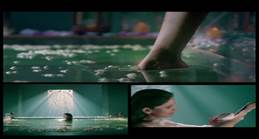
Image 14

Image 15

Image 16

Image 17

Image 18

References
- Asher, T. (2013, November 26). Girls, sexuality, and popular culture: Off our backs. Ball Gowns and Combat Tatoos .
- Bandura, A. R., D., & Ross, S. A. (1977). Social Learning Theory. General Learning Press, New York.
- Behm-Morawitz, E., & Mastro, D. (2009). The effects of the sexualization of female video game characters on gender stereotyping and female self-concept. Sex roles.
- Bragg, S., Buckingham, D., Russell, R., & Willett, R. (2011). Too Much, Too Soon? Children, ‘Sexualisation’ and Consumer Culture. Sex Education, 11(3), 279-292.
- Bryant, J., & Rockwell, S.C. (1994). Effects of massive exposure to sexually oriented prime- time television programming on adolescents' moral judgment. In D. Zillman, J. Bryant, & A.C. Huston (Eds.), Media, children, and the family: Social, scientific, psychodynamic, and clinical perspectives (pp. 183-195). Hillsdale, NJ: Lawrence Erlbaum.
- Buckingham, D. (2000). After the Death of Childhood. Polity Press, Cambridge: UK.
- Calvert, S. L. (2008). Children as Consumers: Advertising and Marketing. The Future of Children, 18(1), 205– 234.
- Lin, C. A. (1997). Beefcake versus cheesecake in the 1990s: Sexist portrayals of both genders in television commercials. Howard Journal of Communications, 8(3), 237– 249.
- Daniels, E. A. (2009). Sex objects, athletes, and sexy athletes: How media representations of women athletes can impact adolescent girls and college women. Journal of Adolescent Research, 24(4), 399–422.
- Dill, K. E., Brown, B., & Collins, M. J. (2008). Effects of exposure to sex-stereotyped video game characters on tolerance of sexual harassment. Journal of Experimental Social Psychology, 44(5), 1402– 1408.
- Donnerstein, E., & Smith, S. (2001). Sex in the media: Theory, influences, and solutions. In D. G. Singer & J. L. Singer (Eds.), Handbook of children and the media (pp. 289–307). Thousand Oaks, CA: Sage.
- Gibbs, G. (2007). Analyzing Qualitative Data. Mila Steele, John Nightingale, 2nd Edition, SAGE Pubication Inc. Thousands Oak: California
- Gill, R. (2008). Empowerment/Sexism: Figuring Female Sexual Agency in Contemporary Advertising. Feminism & Psychology, 18(1), 35– 60.
- Grabe, S., & Hyde, J. S. (2009). Body Objectification, MTV, and Psychological Outcomes Among Female Adolescents. Journal of Applied Social Psychology, 39: 2840-2858.
- Kaiser Family Foundation. (2005, January). U.S. teen sexual activity. Menlo Park, CA: Author.
- Linda Hatch (2011) The American Psychological Association Task Force on the Sexualization of Girls: A Review, Update and Commentary, Sexual Addiction & Compulsivity, 18(4), 195- 211,
- McLeod, S. A. (2011). Bandura - Social Learning Theory
- Merskin, D. (2004). Reviving Lolita? A Media Literacy Examination of Sexual Portrayals of Girls in Fashion Advertising. American Behavioral Scientist, 48(1), 119-129.
- Neil, M. M., & Emily, A. I. (2001). Research on sex in the media: What do we know about effects on children and adolescents? In D.G. Singe & J.L. Singer (Eds.) Handbook of Children and the Media. (pp: 269-287), Thousand Oaks: Sage
- Piaget, J. (1936). Origins of intelligence in the child. London: Routledge & Kegan Paul
- Shanahan, J., Shanahan, J., James, S., & Morgan, M. (1999). Television and its viewers: Cultivation heory and research. Cambridge university press.
- Zurbriggen, E. L., Collins, R. L., Lamb, S., Roberts, T.-A., Tolman, D. L., & Ward, L. M. (2007). APA task force on the sexualization of girls. American Psychological Association
Cite this article
-
APA : Mahmood, Q., Salim, A., & Zulfiqar, A. (2022). Effects of TV Advertisements on Sexualization of Pakistani Children: A Perspective of Heavy and Light Viewers. Global Sociological Review, VII(II), 255-268. https://doi.org/10.31703/gsr.2022(VII-II).28
-
CHICAGO : Mahmood, Qasim, Amna Salim, and Amna Zulfiqar. 2022. "Effects of TV Advertisements on Sexualization of Pakistani Children: A Perspective of Heavy and Light Viewers." Global Sociological Review, VII (II): 255-268 doi: 10.31703/gsr.2022(VII-II).28
-
HARVARD : MAHMOOD, Q., SALIM, A. & ZULFIQAR, A. 2022. Effects of TV Advertisements on Sexualization of Pakistani Children: A Perspective of Heavy and Light Viewers. Global Sociological Review, VII, 255-268.
-
MHRA : Mahmood, Qasim, Amna Salim, and Amna Zulfiqar. 2022. "Effects of TV Advertisements on Sexualization of Pakistani Children: A Perspective of Heavy and Light Viewers." Global Sociological Review, VII: 255-268
-
MLA : Mahmood, Qasim, Amna Salim, and Amna Zulfiqar. "Effects of TV Advertisements on Sexualization of Pakistani Children: A Perspective of Heavy and Light Viewers." Global Sociological Review, VII.II (2022): 255-268 Print.
-
OXFORD : Mahmood, Qasim, Salim, Amna, and Zulfiqar, Amna (2022), "Effects of TV Advertisements on Sexualization of Pakistani Children: A Perspective of Heavy and Light Viewers", Global Sociological Review, VII (II), 255-268
-
TURABIAN : Mahmood, Qasim, Amna Salim, and Amna Zulfiqar. "Effects of TV Advertisements on Sexualization of Pakistani Children: A Perspective of Heavy and Light Viewers." Global Sociological Review VII, no. II (2022): 255-268. https://doi.org/10.31703/gsr.2022(VII-II).28